NineData vs Flyway
NineData and Flyway both support database DevOps workflows. Flyway focuses on database change version management, while NineData provides a broader database DevOps platform for improving database efficiency, security, and governance.
NineData provides a permanently free SaaS edition of Database DevOps Professional Edition for up to 10 data sources. Teams can sign up and start using it without preparing application servers or database hardware.
Flyway is open-source, with the free version providing basic functionality. Advanced features require upgrading to either the Professional Edition or Enterprise Edition, which are paid versions.
Features Comparison
| Category | Feature | Flyway | NineData |
|---|---|---|---|
| Basic Capabilities | Deployment Mode | Local Deployment | Cloud (SaaS), Local Deployment |
| Open Source | Open Source, Apache License, provides basic functionality, advanced features require paid upgrade to Professional Edition or Enterprise Edition | Not Open Source, free for up to 10 database instances (Cloud mode), charges apply for more than 10 | |
| Supported Data Sources | 33 | 100+ | |
| Cloud Platform Compatibility | Not Supported | Alibaba Cloud, Tencent Cloud, Huawei Cloud, Baidu Cloud, China Mobile Cloud, AWS, GCP | |
| Login Mode | ❌ Git Software Integration | Username Password, SSO(LDAP), WeChat | |
| Supported Languages | English | Chinese, English | |
| Database DevOps | SQL Console | ❌ | Supported |
| Object Visualization Management | ❌ | Supports Tables, Views, Stored Procedures, Functions, Triggers, Events | |
| Query Result Set Operations | ❌ | View, Modify, Search, Filter, Export | |
| Session Isolation | ❌ | Supported | |
| SQL Audit & Deployment | SQL Change Deployment | Supported | Supported |
| Change Automatic Backup | ❌ | Supported | |
| Approval Process | ❌ Supported through Git integration, etc. | Supported | |
| OnlineDDL | ❌ | Supported | |
| OnlineDML | ❌ | Supported | |
| Built-in SQL Specifications | 10+ | 100+ | |
| Mobile Approval | ❌ | Supported | |
| Deployment Process Orchestration | ❌ | Supported | |
| Data Security | Sensitive Data Protection | ❌ | Supported |
| Permission Authorization Mode | ❌ | Administrator Authorization, User Initiated Application | |
| Permission Model | ❌ | User, Role, Data Source, Environment Group | |
| Operation Audit | ❌ Supported through Git integration, etc. | Supported | |
| Advanced Data Processing | Data Import | ❌ | Supported |
| Data Export | ❌ | Supported | |
| Data Archiving | ❌ | Supported | |
| Data Tracking | ❌ | Supported for MySQL | |
| Database Union Query | ❌ | Supported | |
| Performance Diagnosis | Slow SQL Performance Analysis | ❌ | Supported |
| Session Management | ❌ | Supported | |
| Others | AI Big Model Integration | ❌ | Supports Text2SQL, AI SQL Diagnosis, ChatDBA |
Difference 1: Product Installation and Deployment Modes
NineData: The default option is Cloud (SaaS). Users can register on the official website and start using NineData immediately. NineData also provides local deployment for enterprises with stricter data compliance requirements. Local deployment requires prepared application and database servers.
Flyway: Flyway is an open-source product that uses local installation and deployment. It requires prepared application and database servers.
Difference 2: Open Source and Free
- NineData: The code is not open-source. The Cloud platform provides a permanent free version of Database DevOps Professional Edition 10 with up to 10 data sources. Beyond 10, charges apply.
- Flyway: It is open-source under the Apache license. Advanced features require upgrading to the Team Edition or Enterprise Edition, which are paid versions.
Difference 3: Supported Database Types
- NineData: Supports over 100 database types including MySQL, Oracle, PostgreSQL, SQLServer, MongoDB, Dameng, OceanBase, PolarDB, AWS Aurora, ClickHouse, and Doris.
- Flyway: Supports around 30 database types including MySQL, PostgreSQL, Oracle, SQLServer, Redis, MongoDB, SQLite, Snowflake, and TiDB.
Difference 4: Cloud Platform Support
- NineData: Supports mainstream cloud platforms such as Alibaba Cloud, Huawei Cloud, Tencent Cloud, Baidu Cloud, China Mobile Cloud, and AWS. NineData can retrieve cloud database information through cloud platform APIs and supports private network connectivity through VPC.
- Flyway: Does not support cloud platforms.
Difference 5: SQL Console
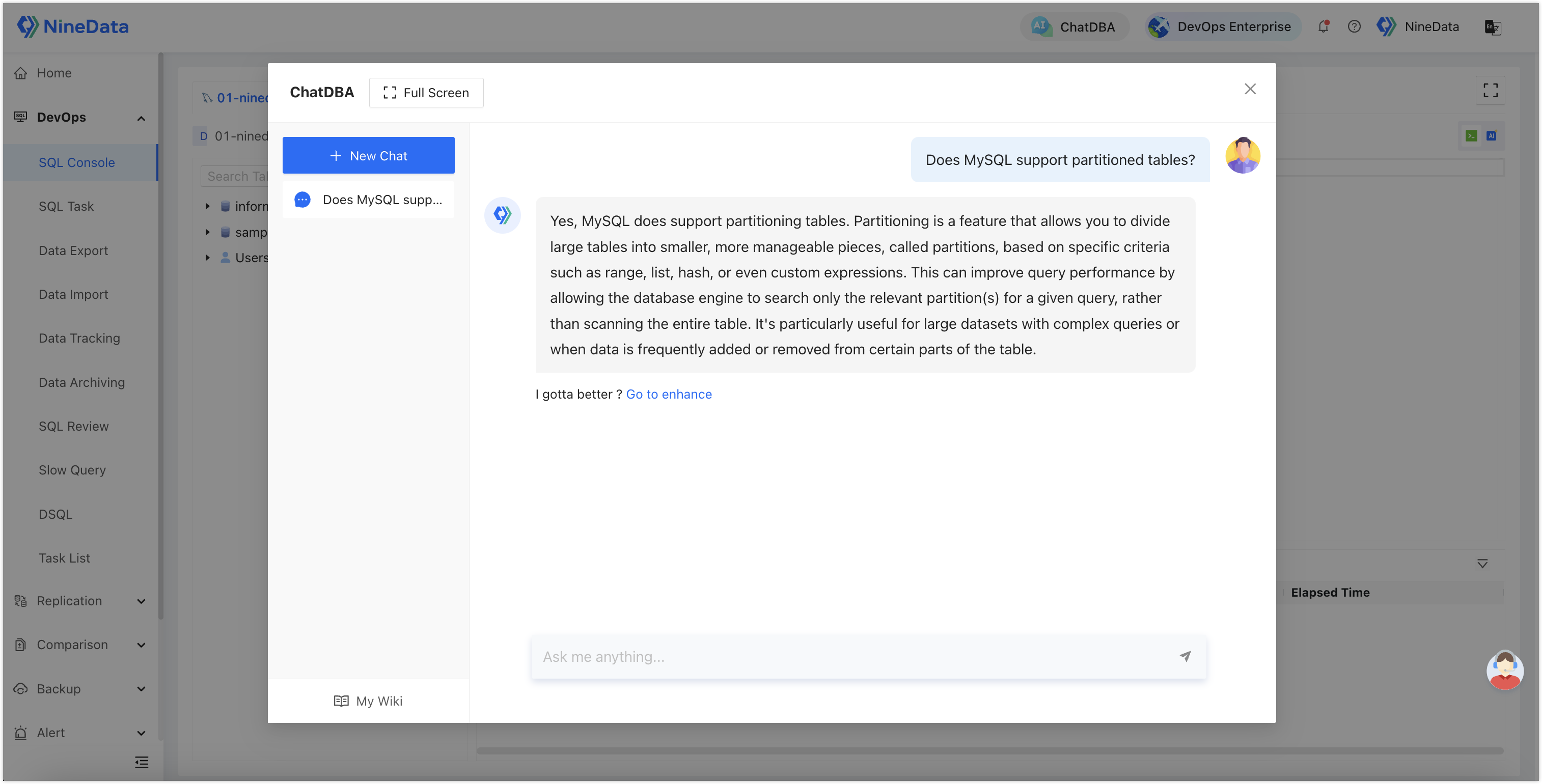
The SQL Console is a primary workspace where developers operate databases, similar to a database client.
NineData: Provides an experience similar to Navicat or DBeaver, including object navigation and visual operations for tables, views, stored procedures, and other objects. SQL editing includes intelligent prompts, and result sets support editing, copying, searching, sorting, and exporting. Enterprises can reduce reliance on separate database client tools.
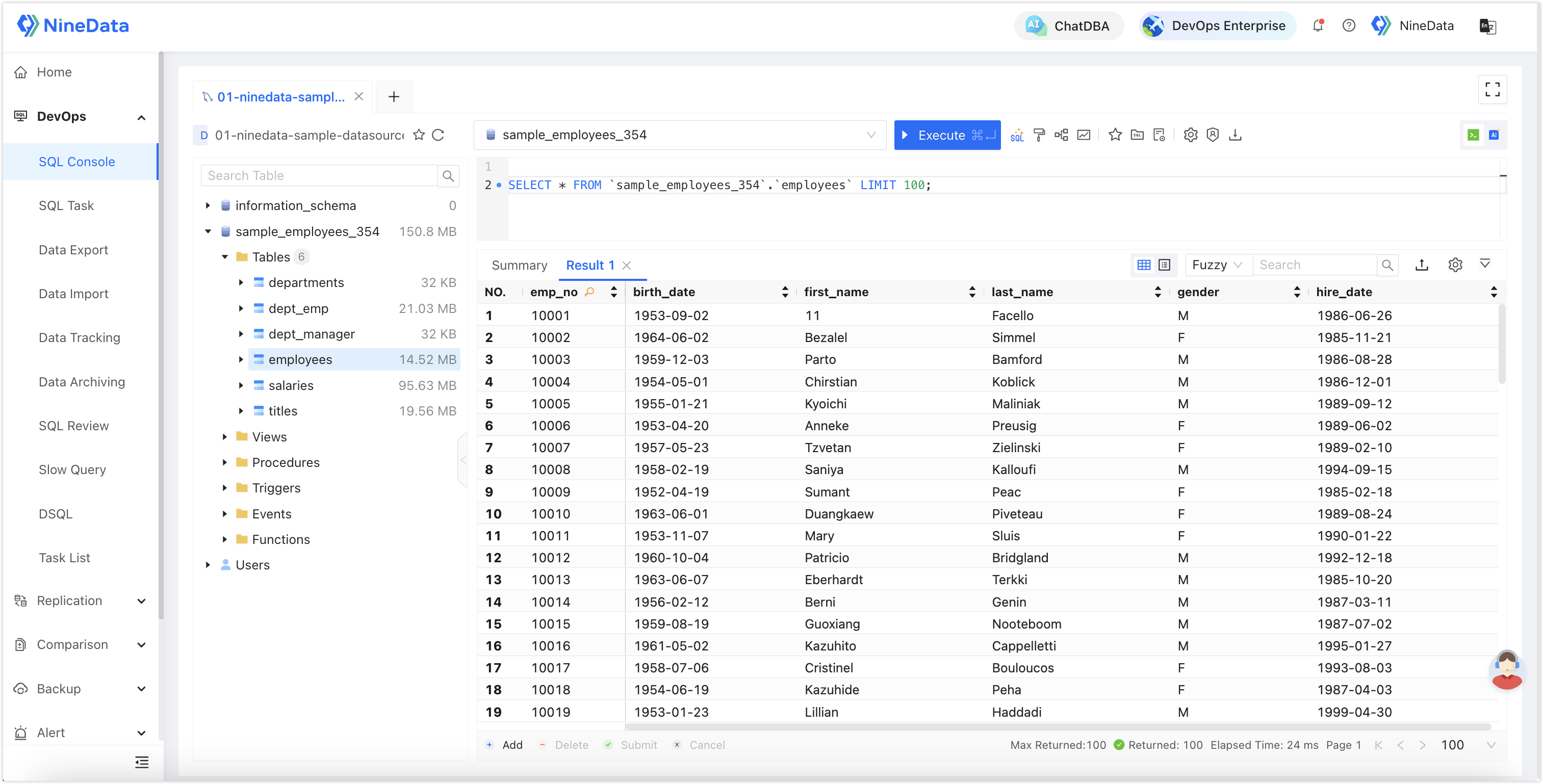
Flyway: Primarily focused on version management and does not provide SQL client functionality.
Difference 6: SQL Audit and Deployment
- Flyway: Distributes SQL change deployment to various environments such as development, testing, production, etc., based on user-provided SQL change scripts and database configuration information. Flyway provides automatic version execution detection, ensuring that database changes reach specified versions in various environments. The paid version of Flyway offers advanced capabilities such as rollback and structure and data comparison.
- NineData: Provides a GUI visual SQL change deployment process and also supports development, testing, and production environment change management through development process orchestration. Currently, NineData does not have very specific version concepts.
In comparison to Flyway, NineData has the following advantages:
- OnlineDML: Helps teams correct large batches of data while reducing business impact. NineData can execute changes in batches to improve operational efficiency and database stability.
- OnlineDDL: Supports MySQL database DDL without table locking for changes.
- SQL Task Pause: Supports manual pause during SQL task execution.
Difference 7: SQL Development Standards
SQL development standards are an important component of enterprise database development standards, covering aspects such as primary keys, field types, and field naming conventions. Traditional client tools do not provide such features, making them a core capability of database DevOps products.
- NineData: Supports over 100 audit standards.
- Flyway: Supports over 10 audit standards.
Difference 8: Sensitive Data Protection
Databases typically store business-sensitive data such as customer phone numbers and bank card numbers. Traditional client tools do not provide sensitive data desensitization protection, making sensitive data leakage prone. Both NineData and Flyway provide data desensitization capabilities.
NineData: Provides sensitive data identification and masking capabilities for complex SQL statements.
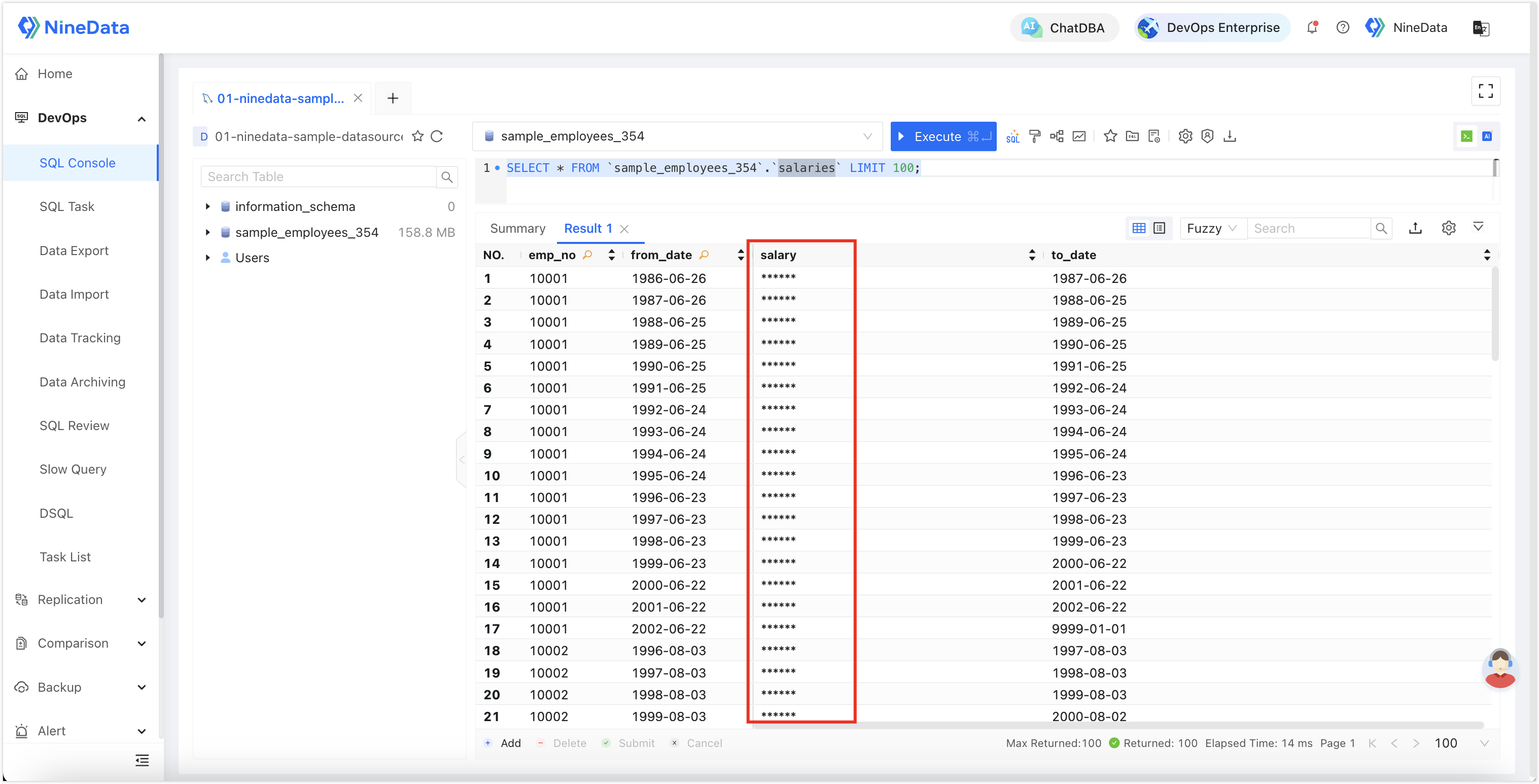
Flyway: Does not support sensitive data protection.
Difference 9: Permission Handling Modes
NineData: Provides the ability for administrators to grant permissions in the backend and for users to apply for permissions proactively.
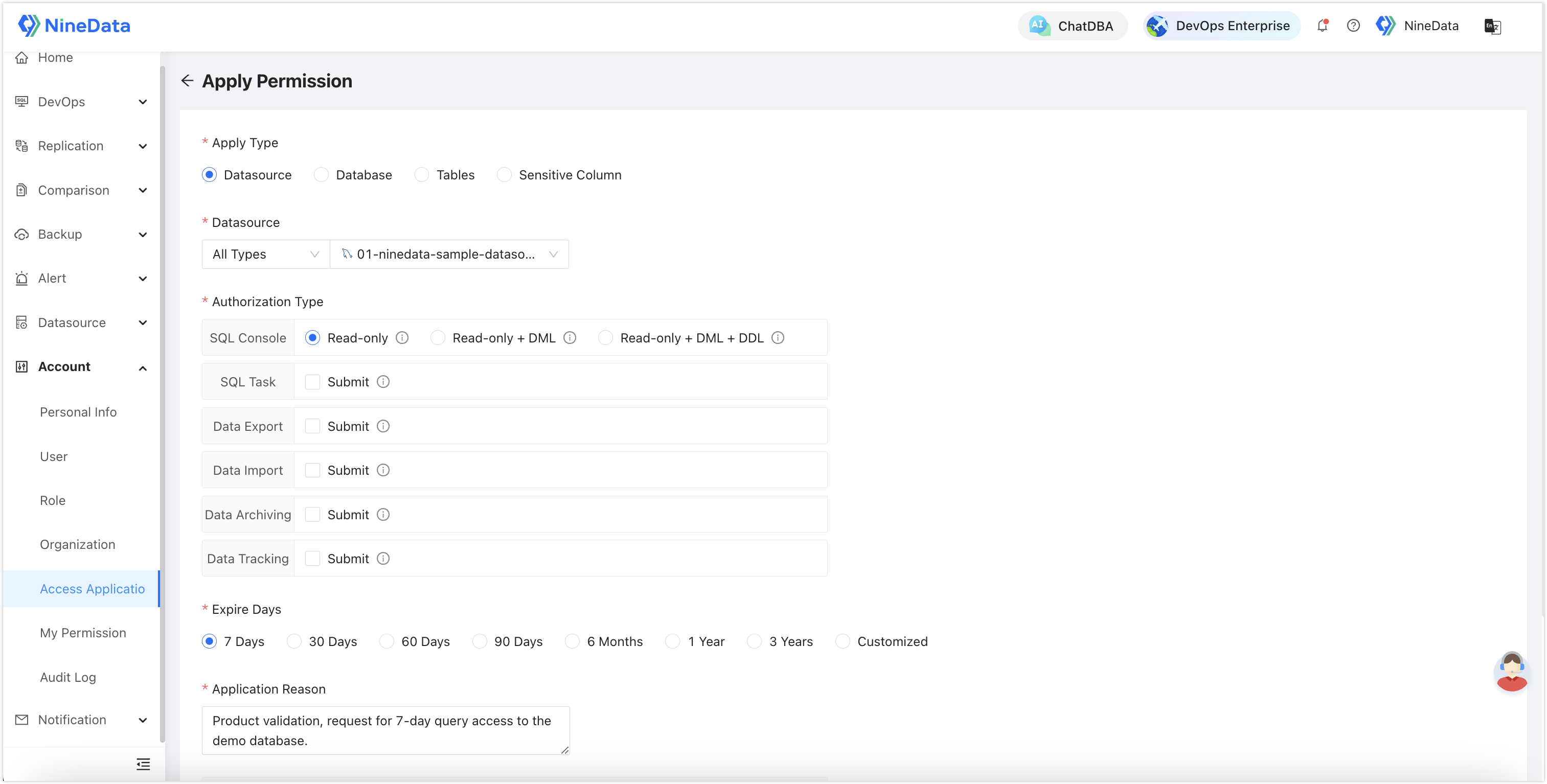
Flyway: Does not have its own permission system and needs to be integrated into other systems.
Difference 10: Multi-language Support
- NineData: Chinese and English.
- Flyway: English.
Advanced Features Supported by NineData but Not by Flyway
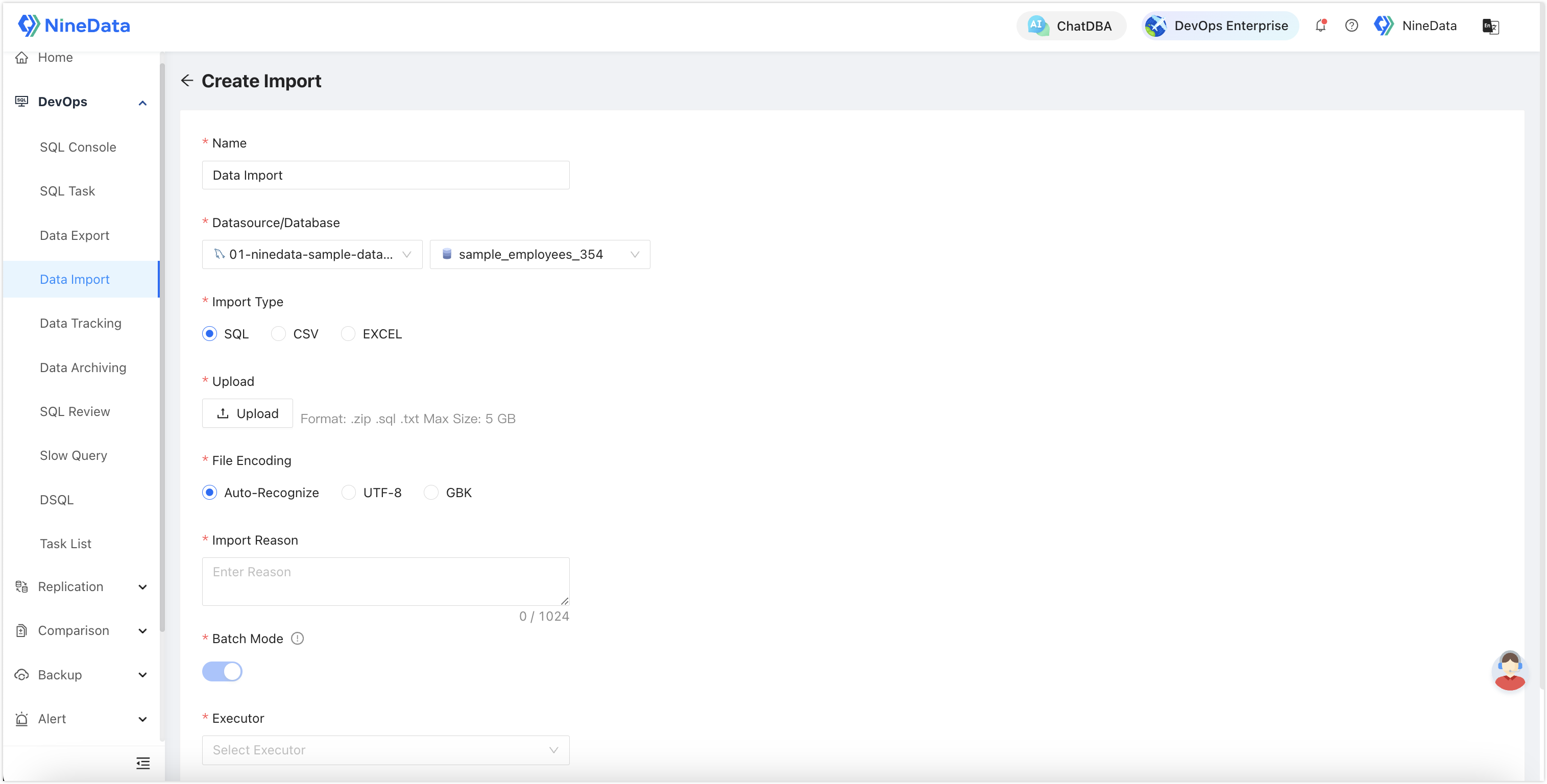
Data Import: Suitable for importing large amounts of data into databases. Supports single files up to 5 GB and can handle SQL scripts or CSV file formats.
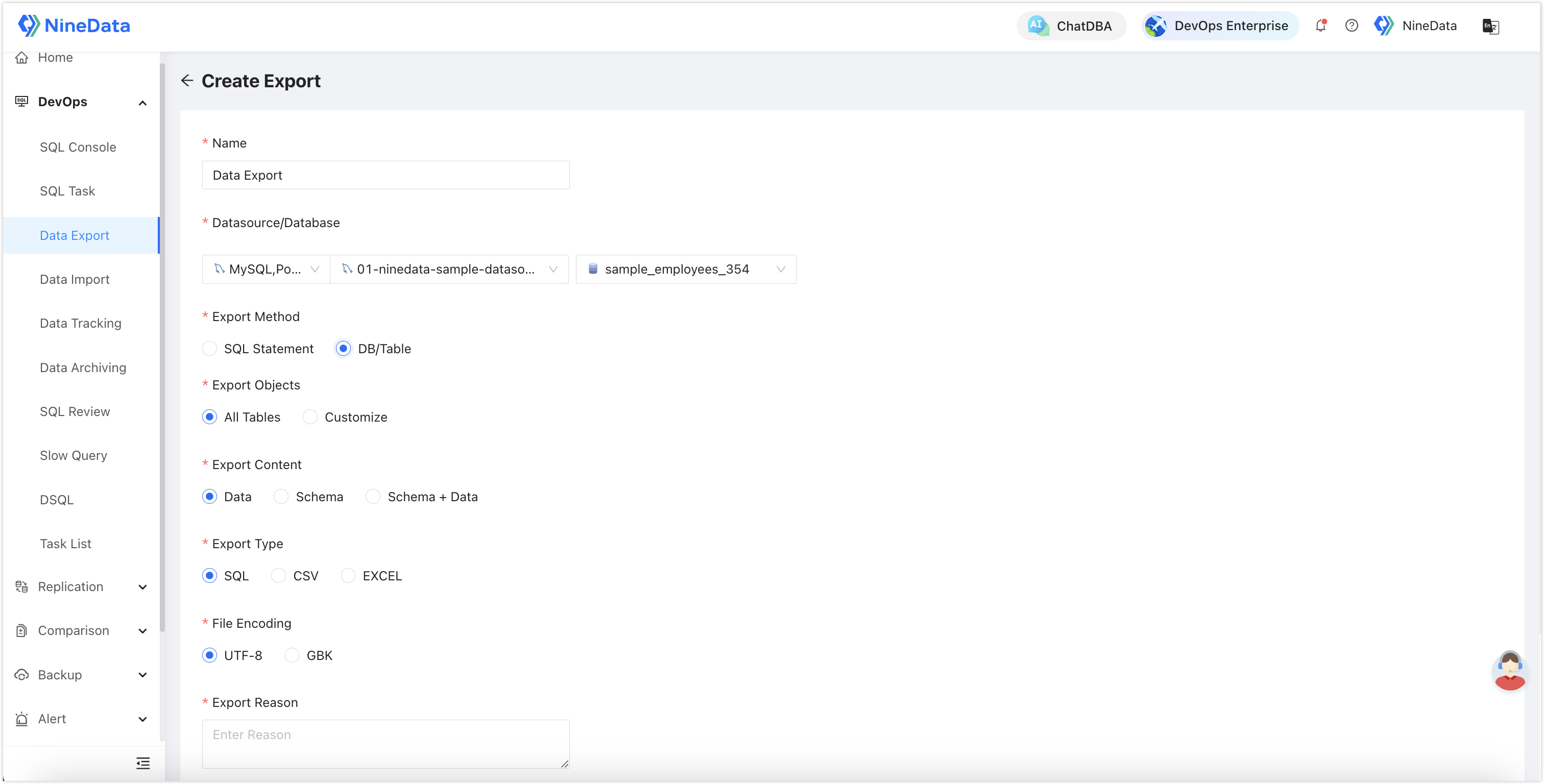
Data Export: Suitable for quick data export, supporting automatic data export desensitization and the option to export entire databases, multiple tables, or via SQL statements.
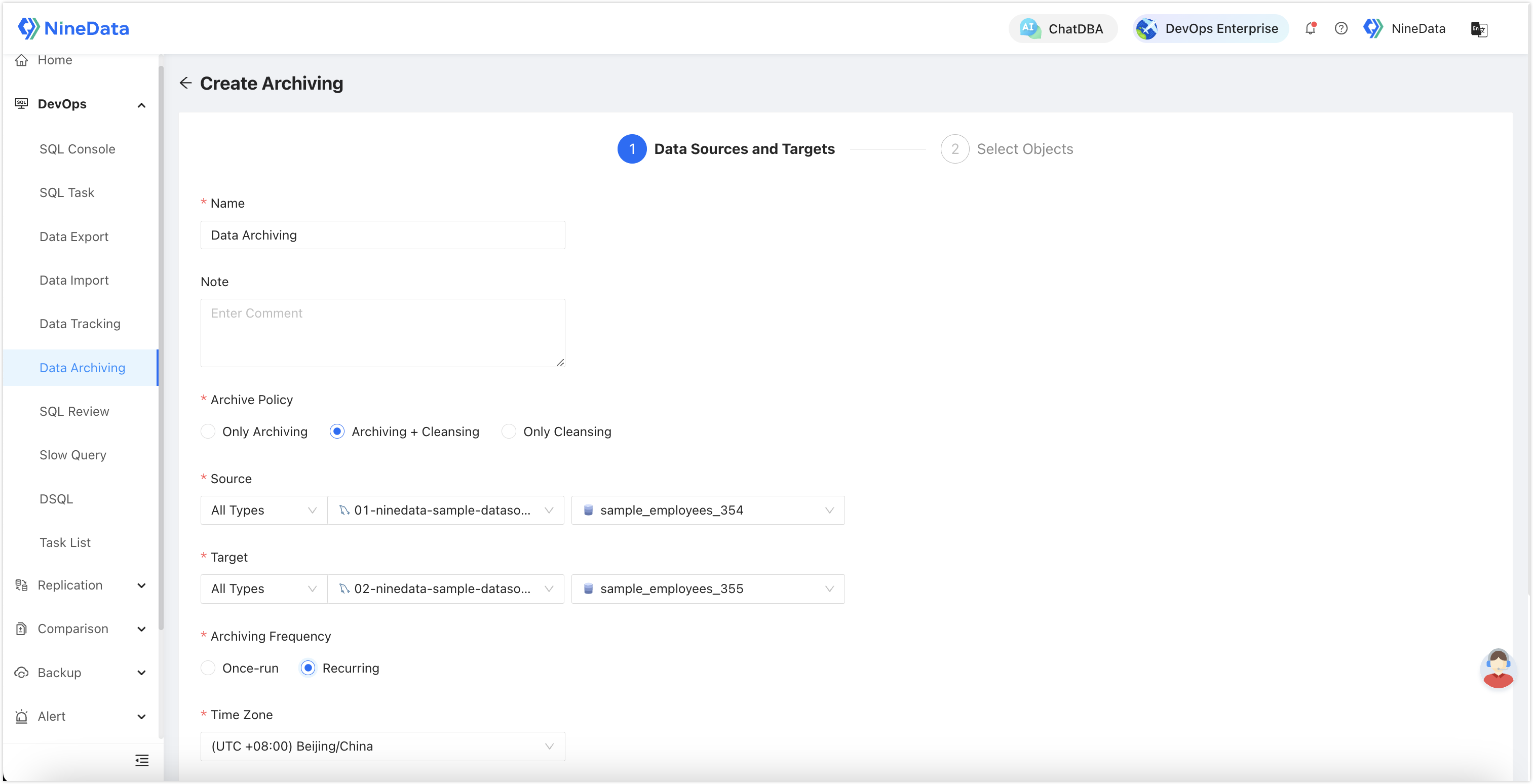
Data Archiving: Suitable for archiving and cleaning historical data, allowing configuration of cleaning rules and scheduled execution (Flyway can support MySQL databases through the pt-archive plugin).
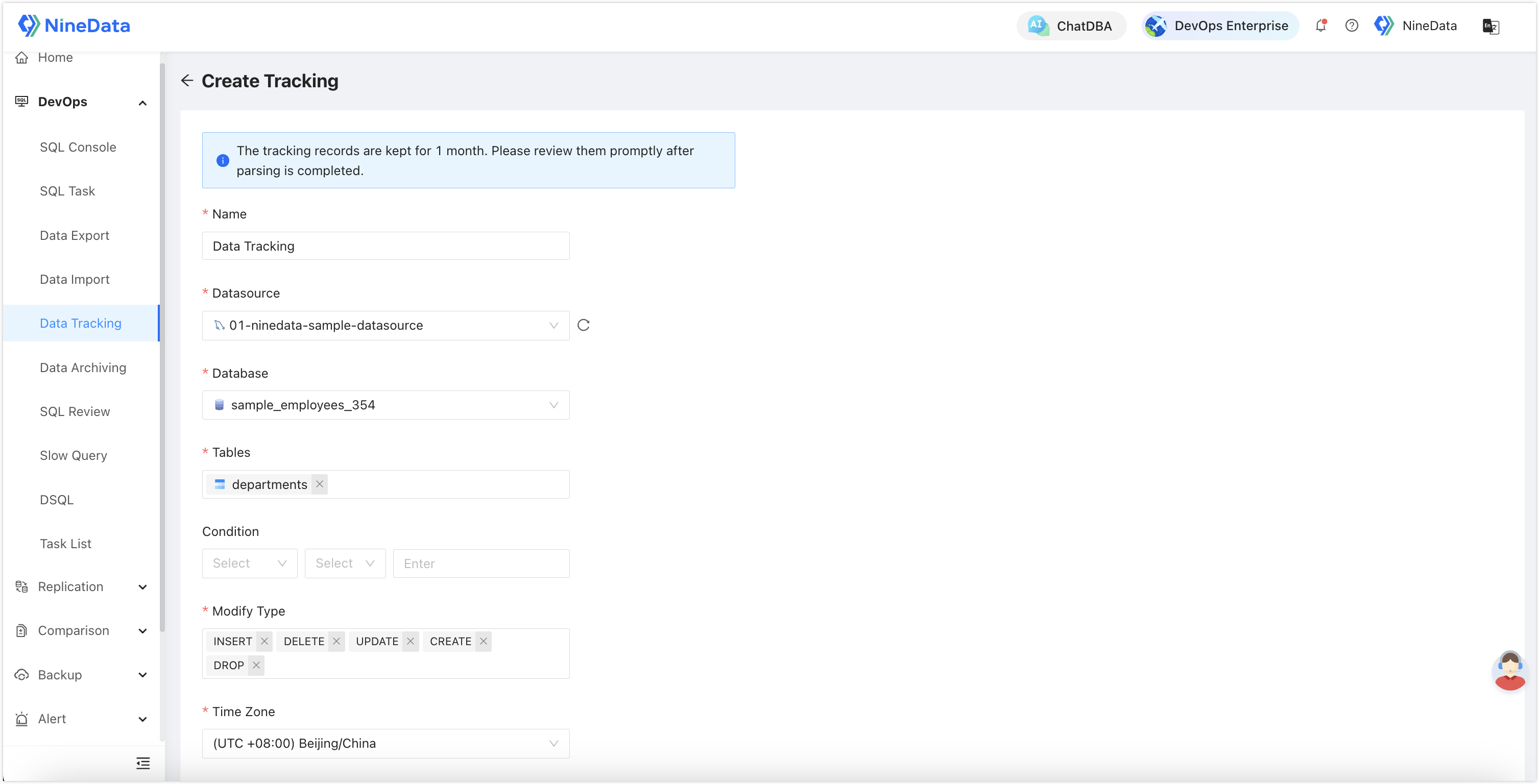
Data Tracking: Supports tracking and querying data change history, suitable for quick rollback processing after misoperations. Currently supports MySQL databases.
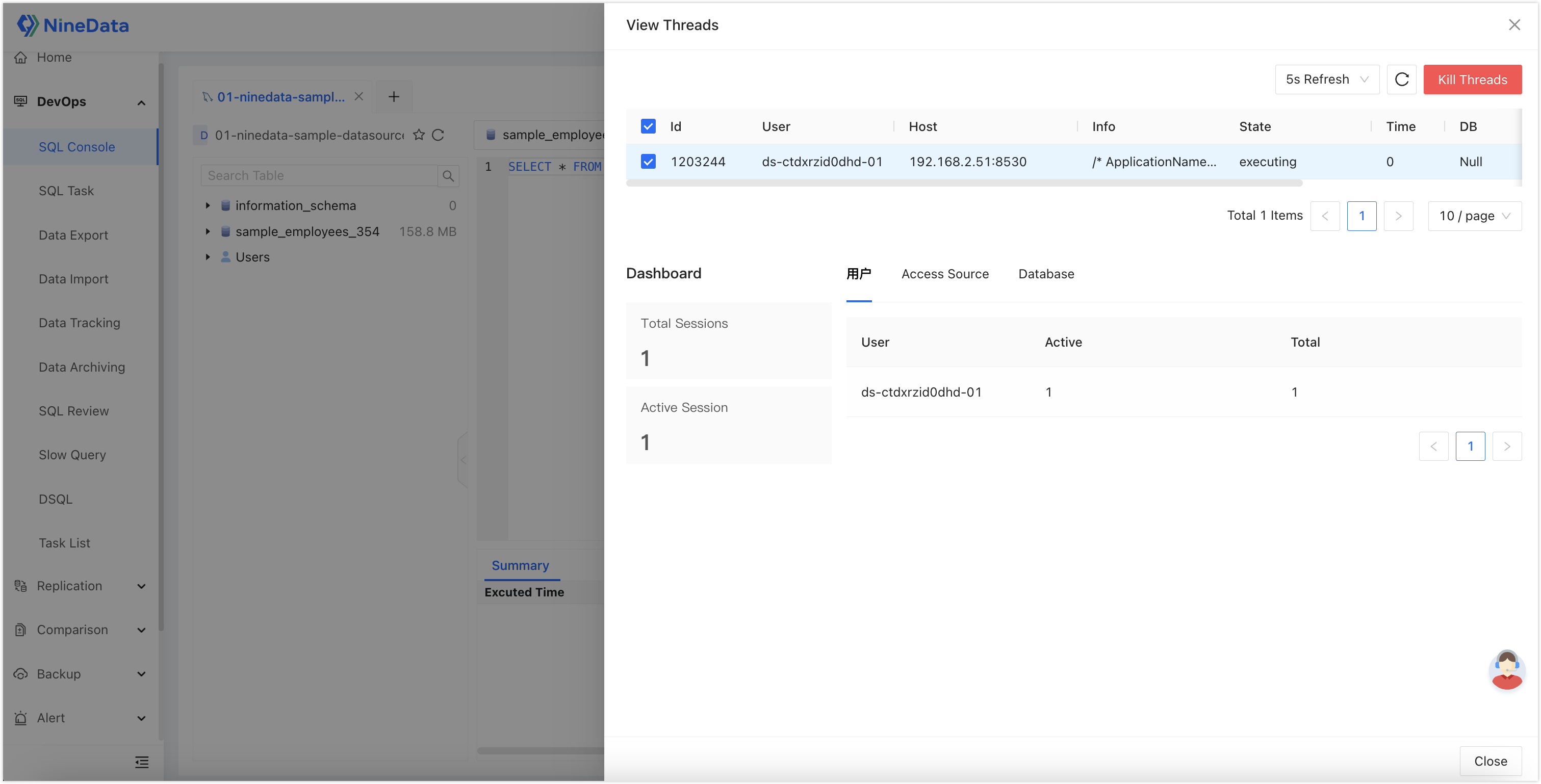
Session Management: Supports real-time database session status query, killing sessions, and statistical grouping by client, login user, and session state.
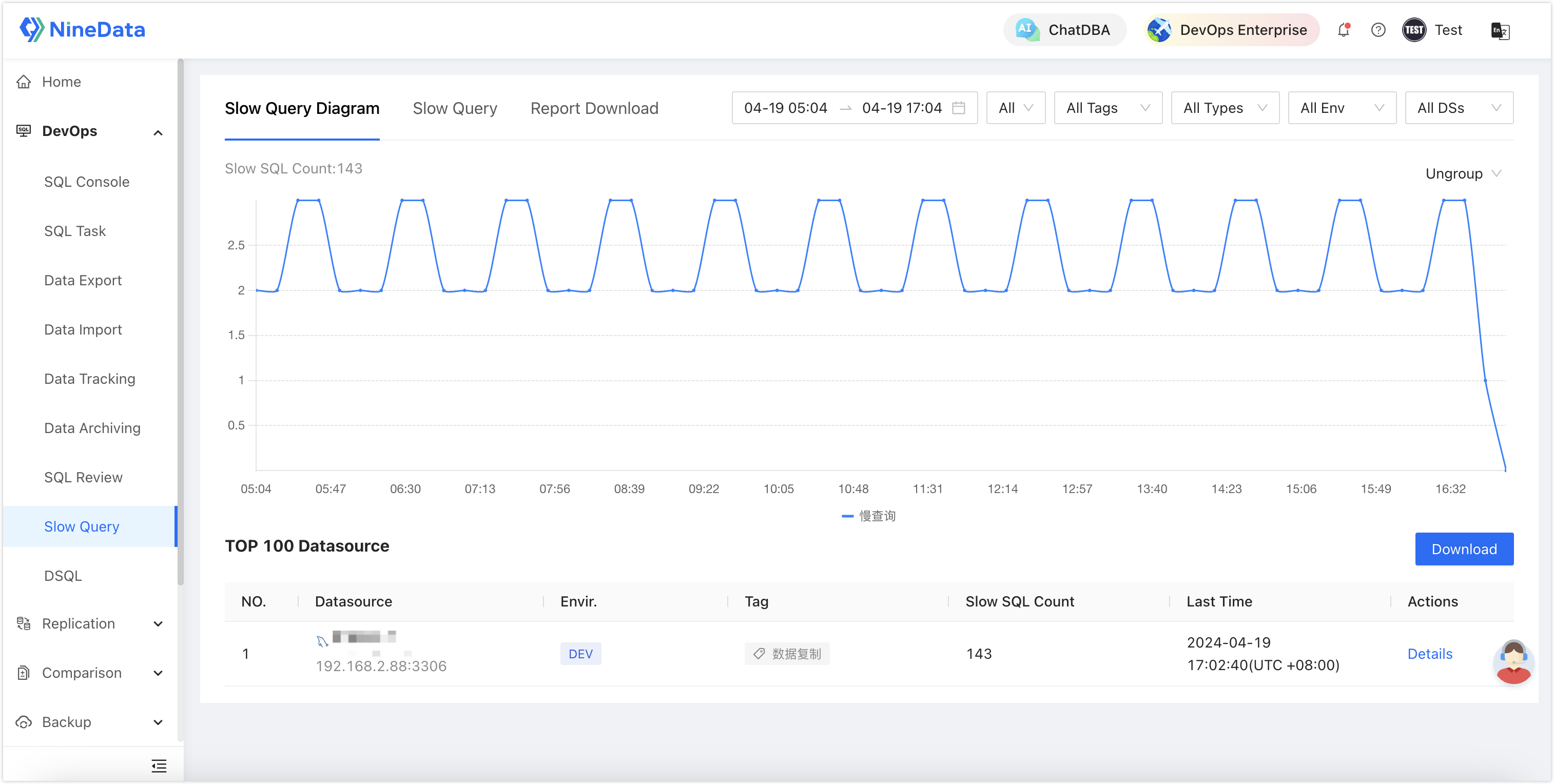
Slow SQL Management: Supports automatic collection, analysis, and diagnosis of SQL historically executed in databases.
Development Process Orchestration: Provides database CI/CD capabilities, supporting enterprise configuration of database release processes for development, testing, production, and other environments.

AI Big Model Integration: Provides innovative capabilities such as natural language generation of SQL, AI SQL optimization, and ChatDBA based on large model AI technology.