Migrating Redis to AWS ElastiCache with Zero Downtime
How NineData enables seamless, scalable, and safe cloud transitions
In today’s cloud-native world, running critical workloads on self-hosted Redis can hold your architecture back — both in terms of scalability and operational overhead.
But migrating to AWS ElastiCache, even with all its benefits, isn’t as simple as flipping a switch.
It’s Redis, after all — memory-bound, sensitive to latency, and notoriously difficult to migrate without disruption.
That’s why we built Redis-to-ElastiCache replication into NineData — so you can move to the cloud without downtime, data loss, or stress.
Why Redis Migration Is So Complicated
Let’s face it: Redis is fast and elegant, but migrating it is not.
Traditional approaches like exporting RDB snapshots or restarting with new configs often mean downtime — something most businesses can’t afford.
More specifically, here’s what makes Redis migration painful:
- 💥 Data consistency: It’s hard to ensure byte-perfect syncs between source and destination.
- ⚡ Live data: Redis is a write-heavy system. Capturing and replaying real-time updates is tough.
- 📉 Performance risks: Migration can affect the stability of your live Redis workload.
- 🚦 Traffic switching: How do you cut over to the cloud safely, with a rollback plan?
Enter NineData: Redis Migration Without Regret
We designed NineData’s migration solution to meet these exact challenges.
Whether you're handling gigabytes or terabytes of Redis data, here’s how it works:
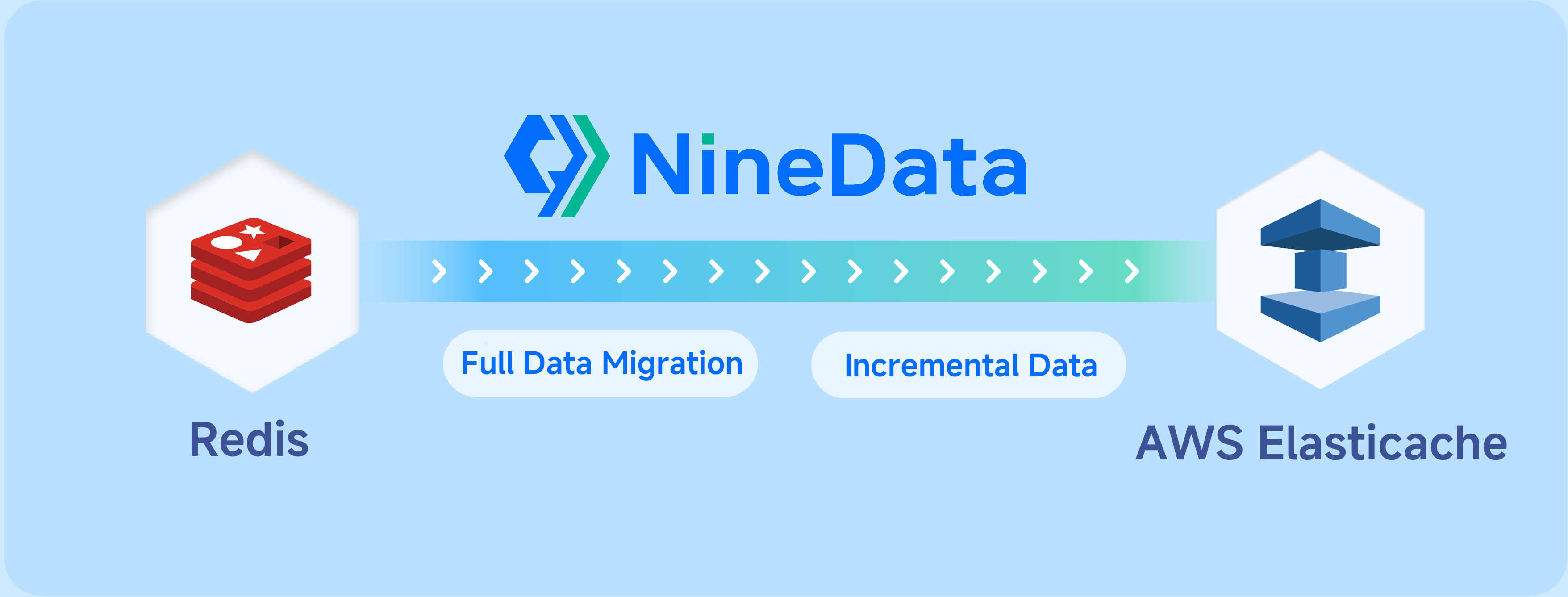
🔁 Real-Time Replication with Built-in Resilience
- OOM-safe architecture: No memory blowups — we handle huge datasets smoothly.
- Self-healing resume: Disruptions (e.g. network issues) won’t break the pipeline. Sync automatically resumes from the last checkpoint.
🔒 Private Migration Without Public IP Exposure

No need to expose your Redis instances to the public internet.
Our secure NineData Gateway connects to on-prem Redis via internal routing, and to AWS ElastiCache via PrivateLink, ensuring low latency and high security throughout the transfer.
🎯 Application-Aware Cutover
Full Data Sync: Pulls complete datasets with minimal load on production.
Incremental Sync: Streams live updates as they happen.
Controlled Switchover: Switch to ElastiCache during off-peak hours. Rollback-ready.
It’s like a safety net for your Redis cloud migration.
Step-by-Step Demo
A visual walkthrough of the process:
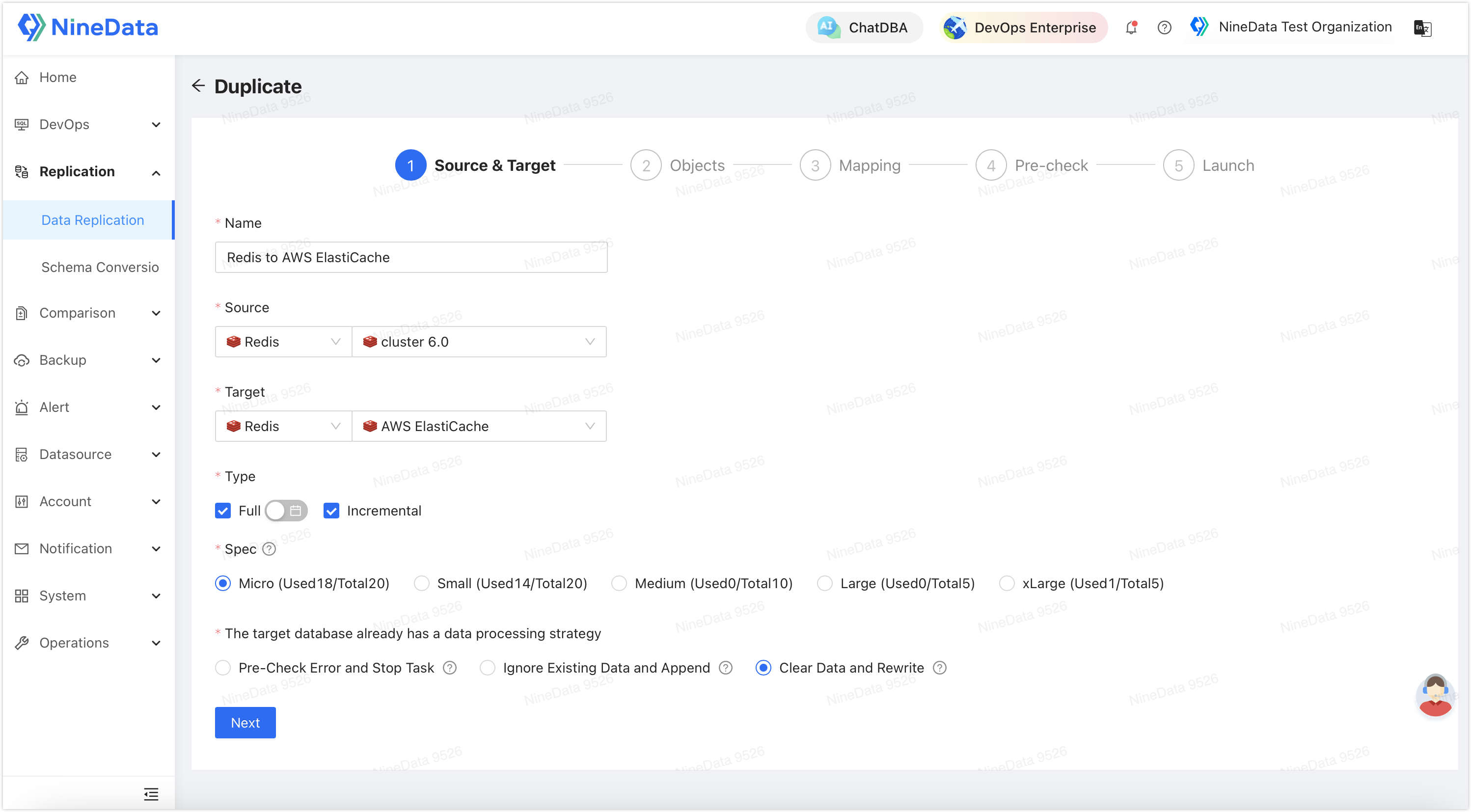
Select source and destination, Choose full + incremental replication mode.
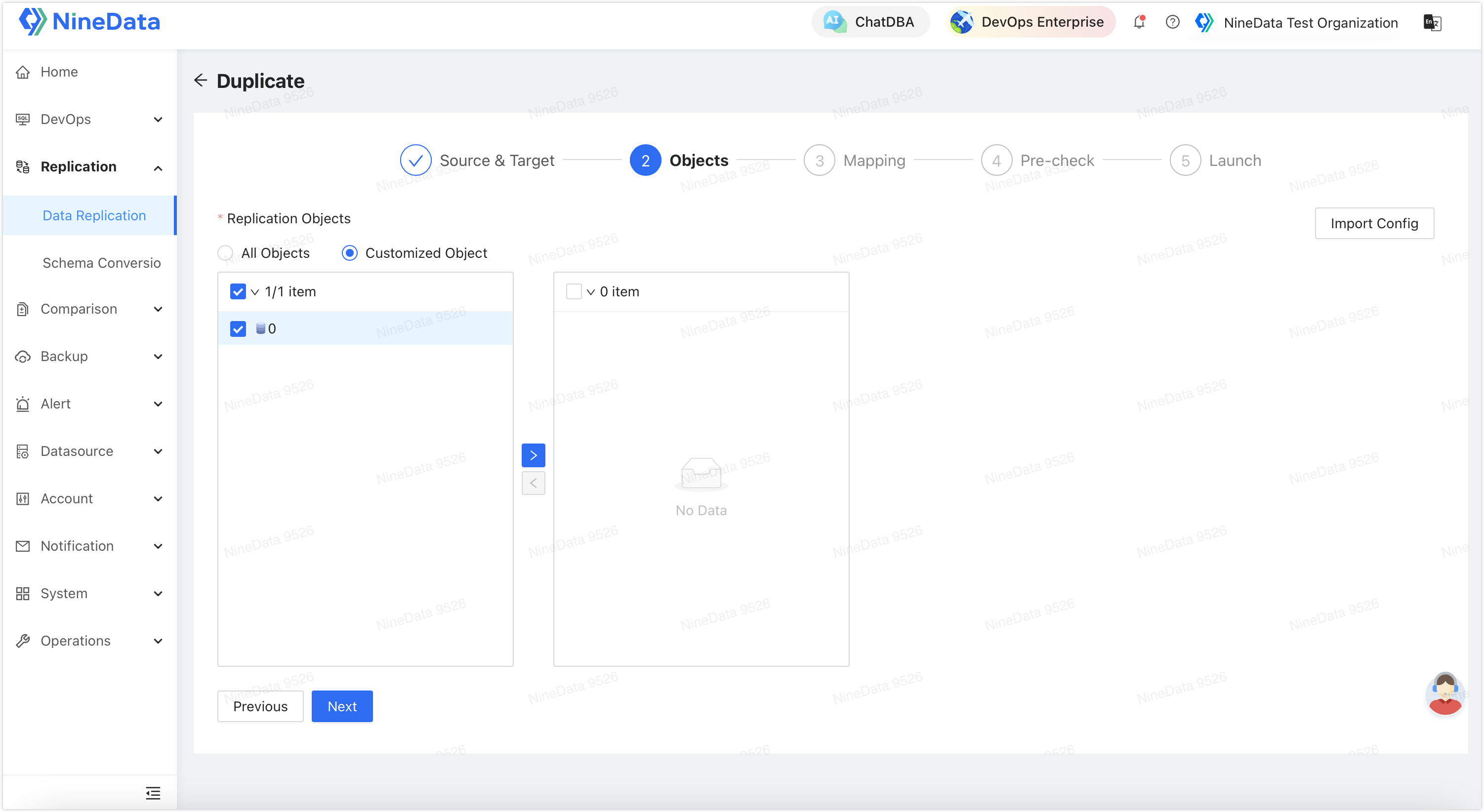
Choose which Redis keys to migrate.
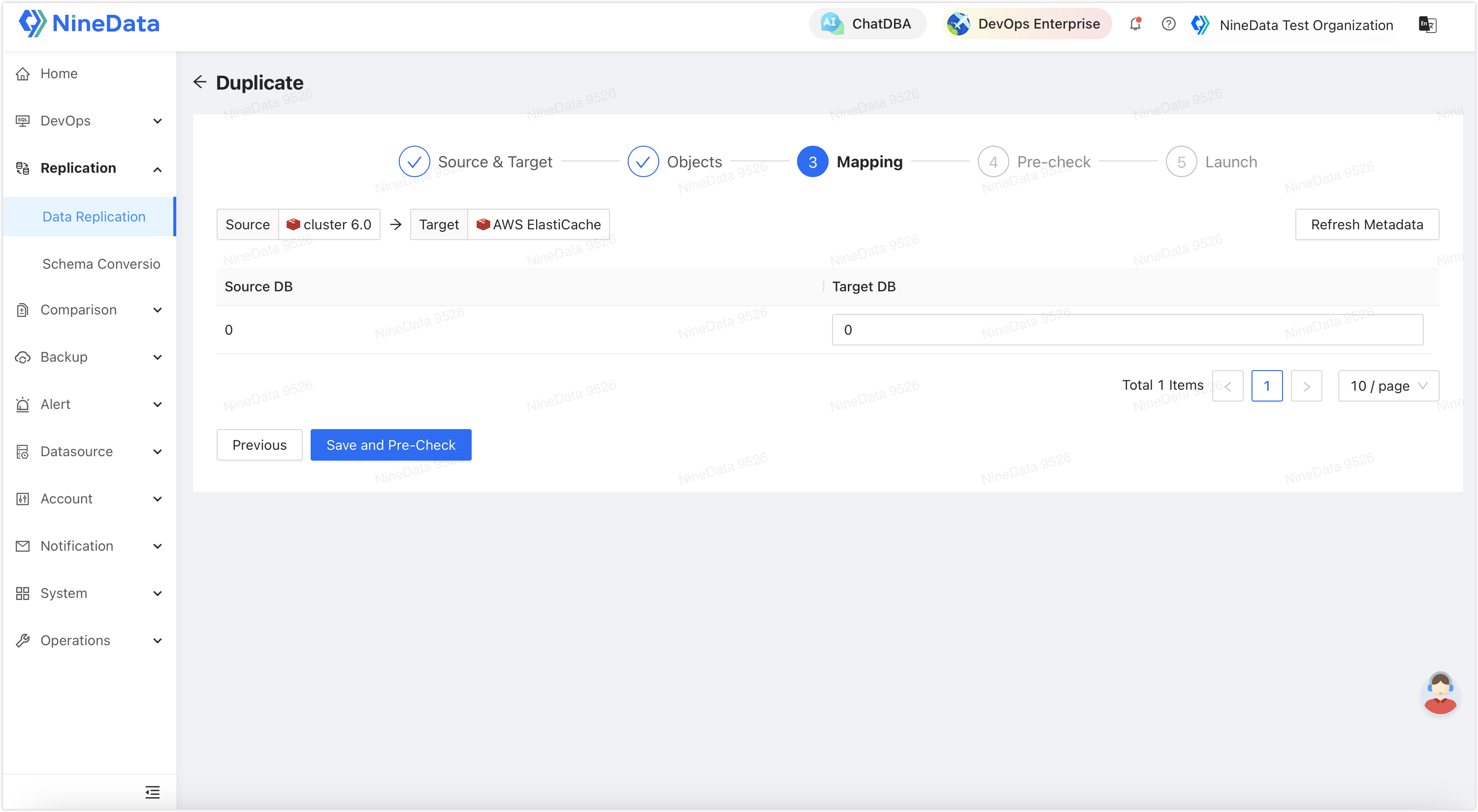
Define field and key mappings.
Run a smart pre-check, Detect misconfigurations before they cause downtime.
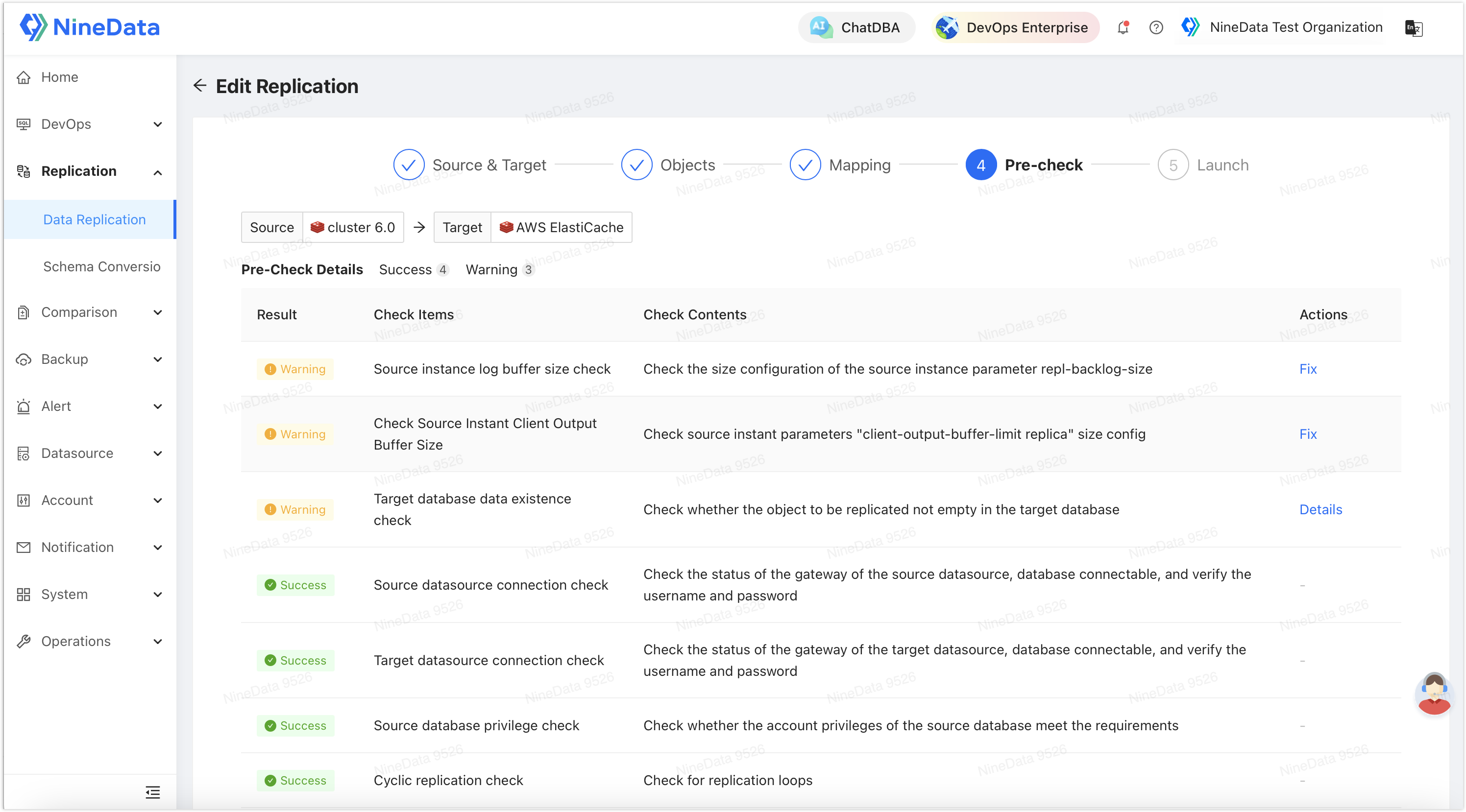
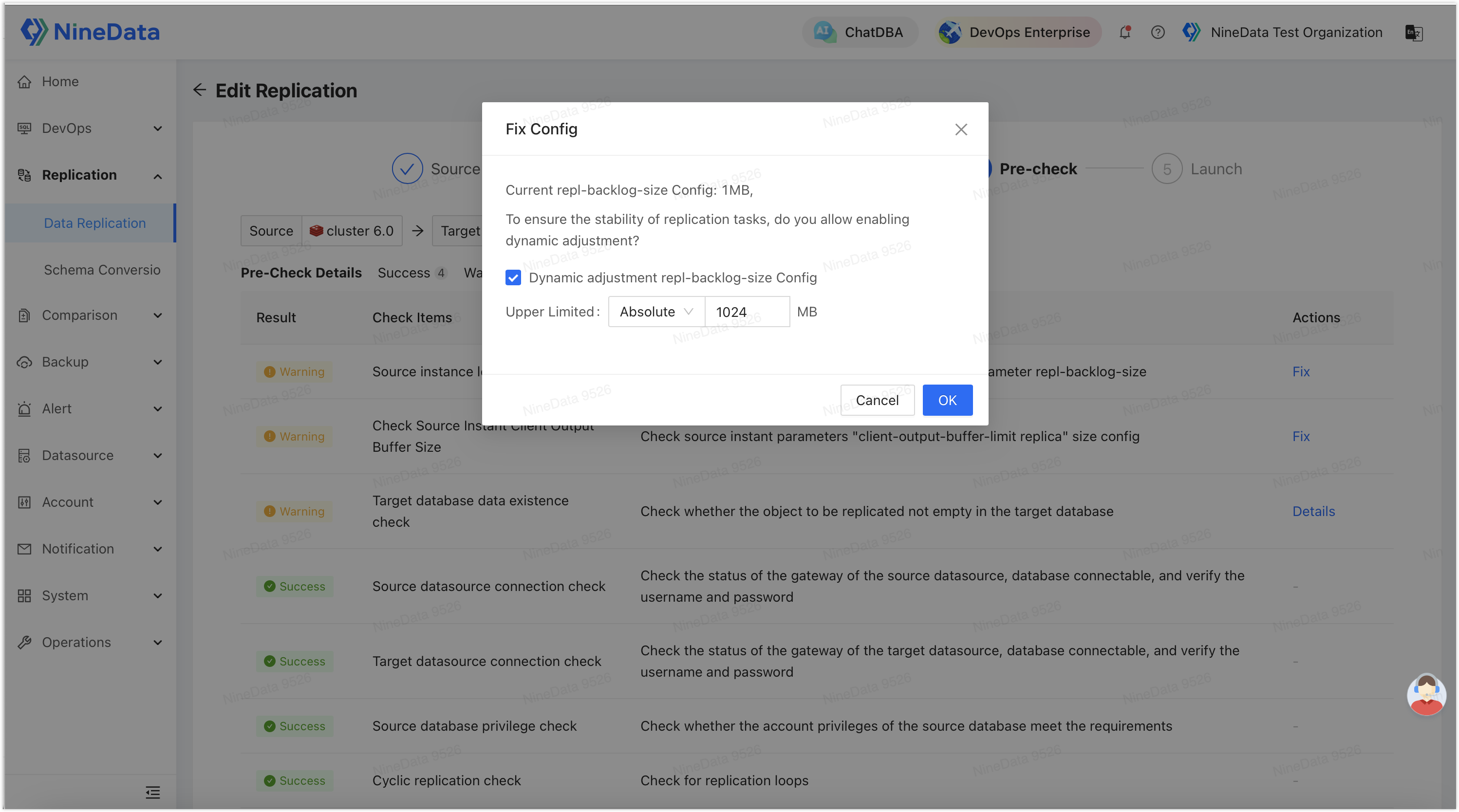
Auto-fix available:
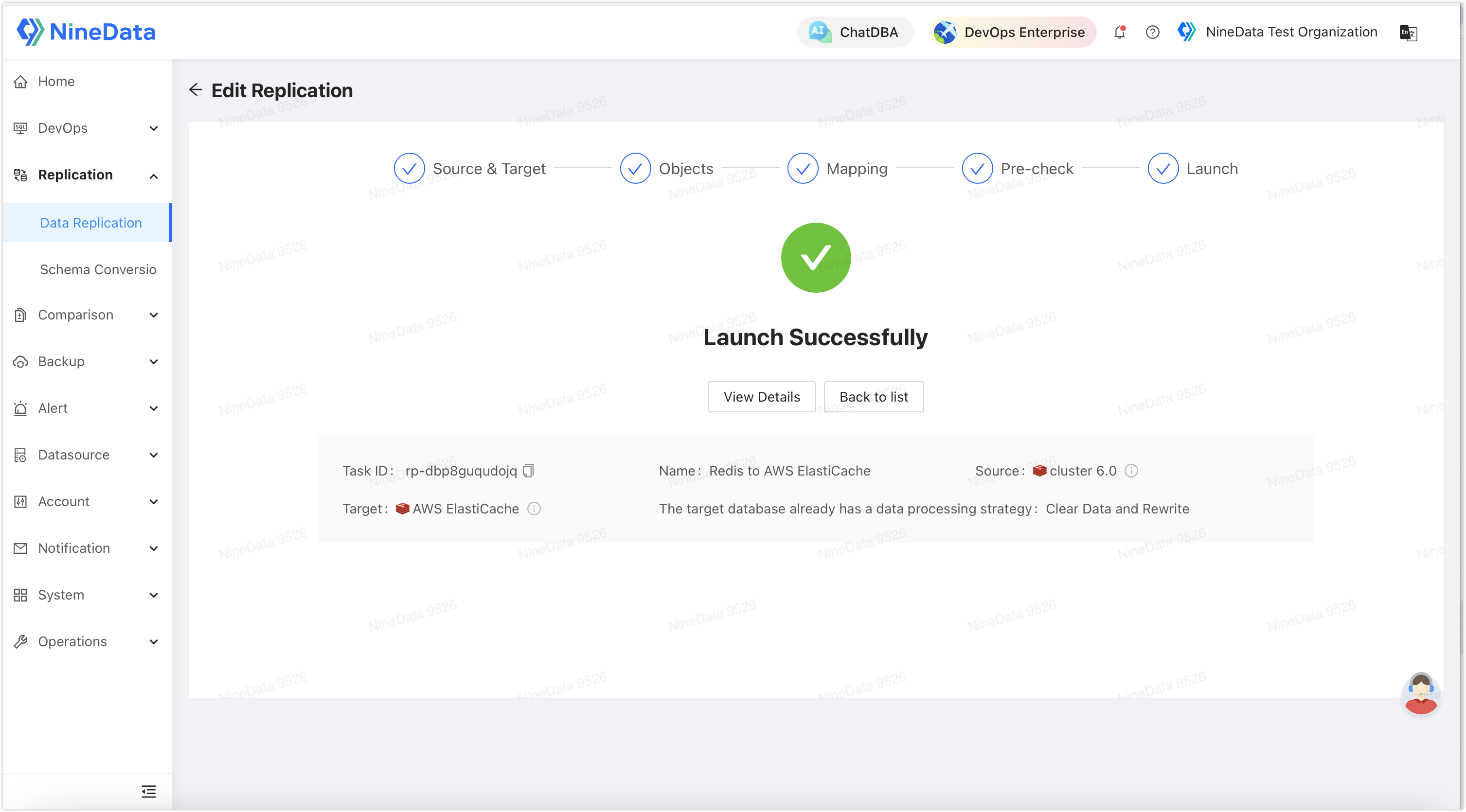
Start migration and monitor progress.
Why It Matters
Redis powers high-frequency, low-latency applications — from caching layers to real-time systems.
Moving Redis to the cloud shouldn’t be risky.
With NineData, it's not.
We give you a battle-tested, production-grade pathway to ElastiCache — one that’s fast, safe, and reliable.