SQL Server Just Got Smarter: Introducing Bi-Directional Replication with NineData
If you’ve worked with SQL Server, you already know it’s everywhere, powering financial transactions, running supply chains, and supporting retail operations across the globe.
But here’s the catch: when companies scale across regions, they need faster access, disaster recovery, and real-time collaboration between databases. That’s where things get messy.
And that’s exactly why we built something new. 🚀
NineData now supports SQL Server ↔ SQL Server Bi-Directional Replication, making your databases talk to each other like equals, no matter where they are.
Why Traditional Replication Falls Short
Most replication setups look like this:
- One master database handles all writes.
- One or more replicas get the updates for reads, backups, or migrations.
It’s safe. It works. But it’s… limited.
Picture this: You run SQL Server in London and another in Singapore. In a traditional setup, all writes in Singapore must first travel back to London. That means extra latency. Worse, if London goes offline, Singapore can only serve read-only traffic. Business impact? Huge.
Enter Bi-Directional Replication
Now imagine flipping the script.
With bi-directional replication, both London and Singapore act as masters. Writes made in London sync instantly to Singapore, and vice versa.
It’s like building a two-way superhighway between your databases:
- Faster writes, no matter where your users are
- Zero downtime if one server goes down
- Always-on, always-consistent data
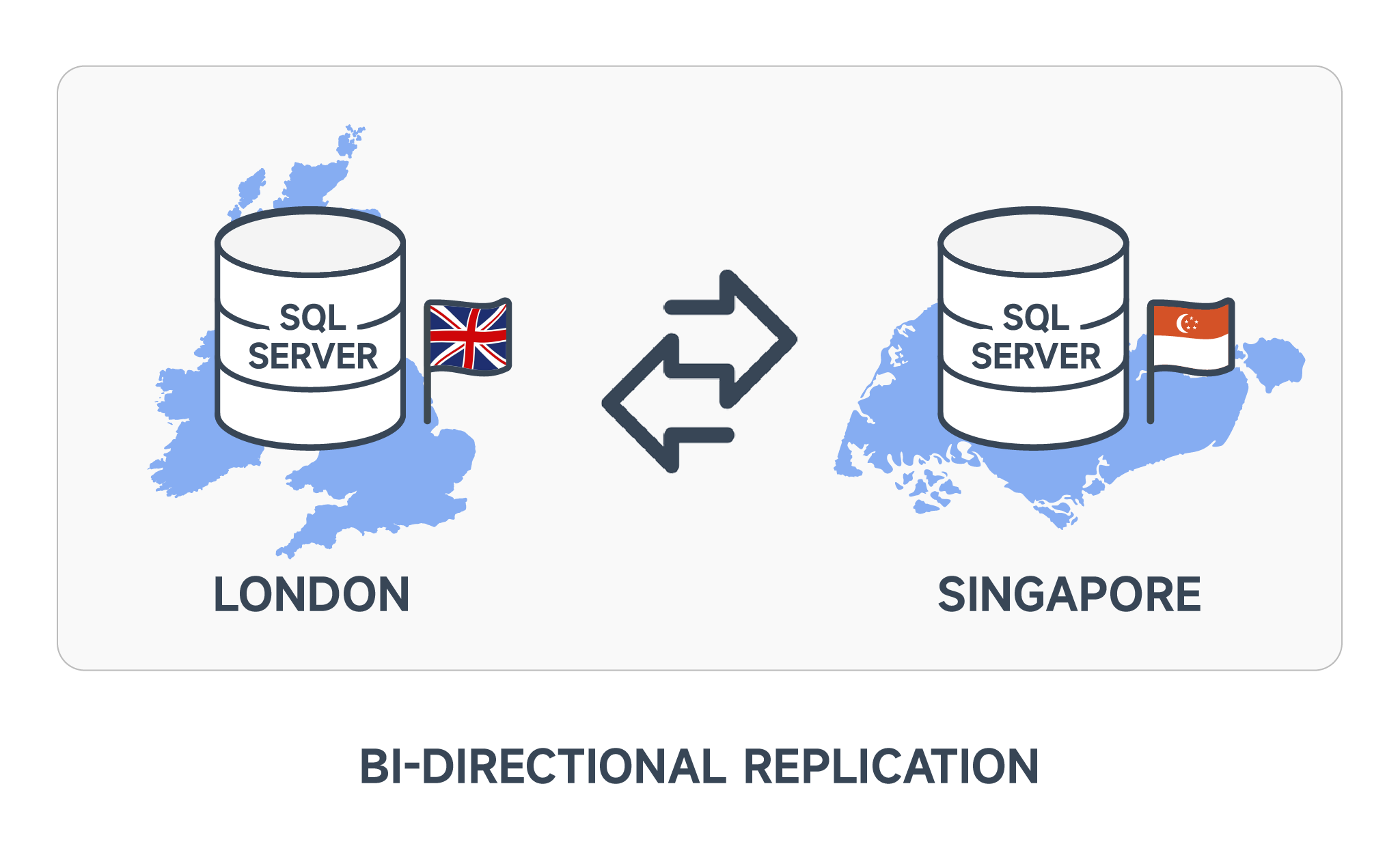
A two-way highway for your data, London ↔ Singapore
What Makes NineData Different?
We know what you’re thinking: “Cool idea, but doesn’t this cause conflicts? Or endless replication loops?”
Fair questions. That’s why we designed our system to handle the tricky parts for you.
Here’s how NineData keeps things sane:
✅ Smart Conflict Detection – If both servers update the same record, NineData automatically applies conflict-resolution rules you define.
✅ Loop-Free Sync – Our multi-active tagging ensures updates don’t bounce back and forth forever.
✅ Selective Replication – Choose which databases or tables to sync. Want only orders from London and inventory from Singapore? Easy.
✅ Visibility & Alerts – A real-time dashboard shows replication speed and latency. If something breaks, you’ll know right away.
How It Works
Pick your source and target databases.
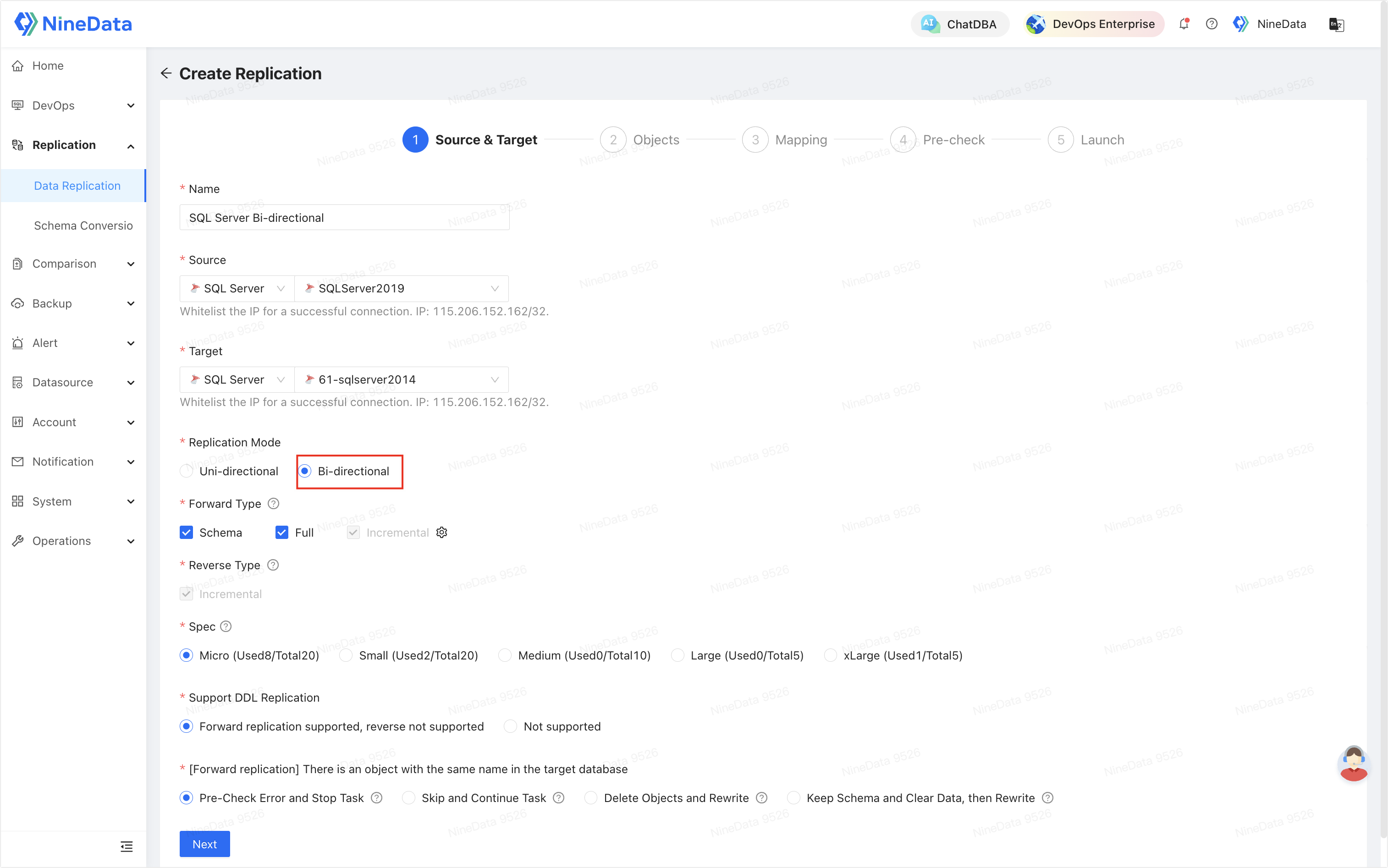
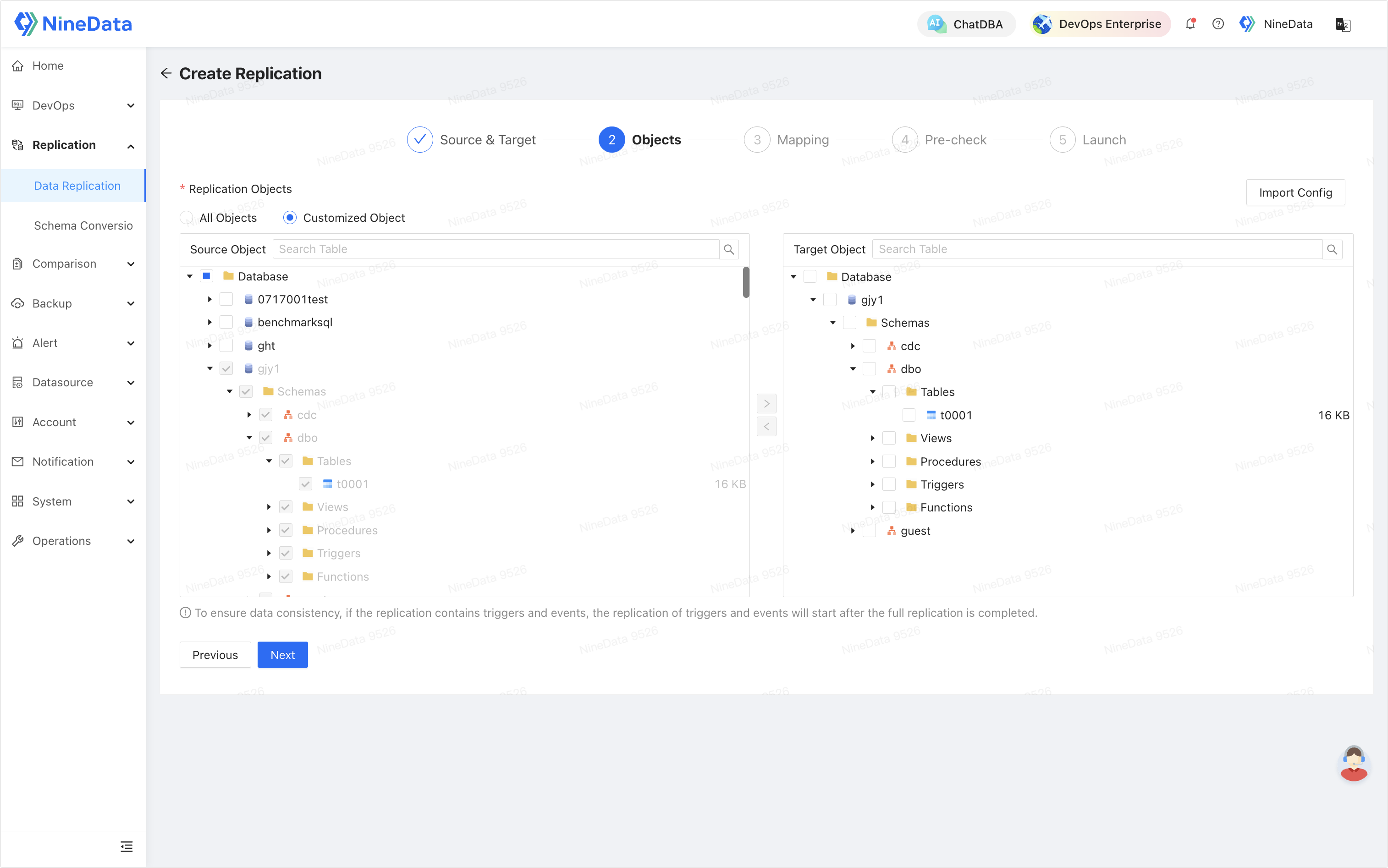
Choose the objects you want to replicate.
Define your mapping rules.
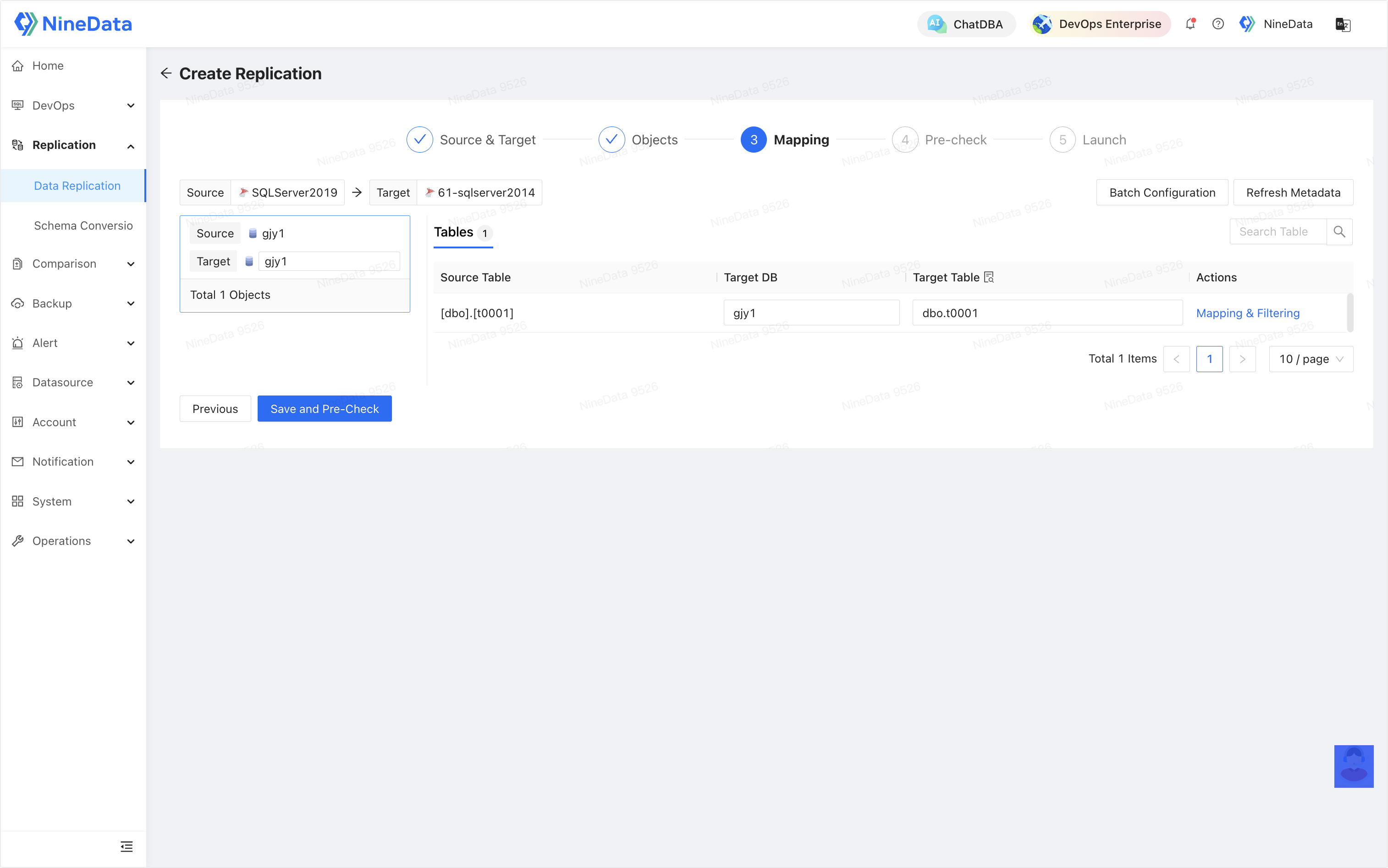
Let NineData run a pre-check.
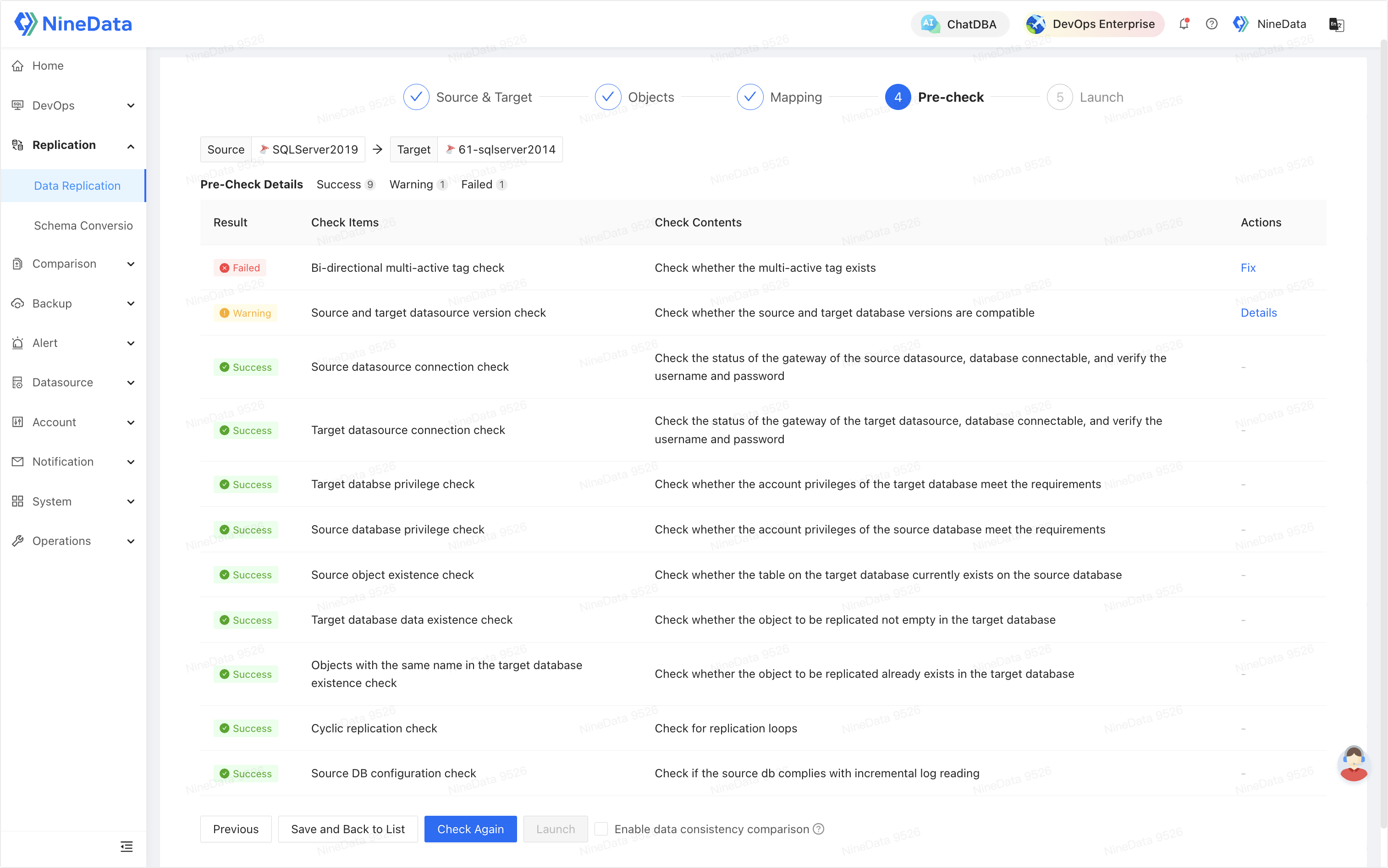
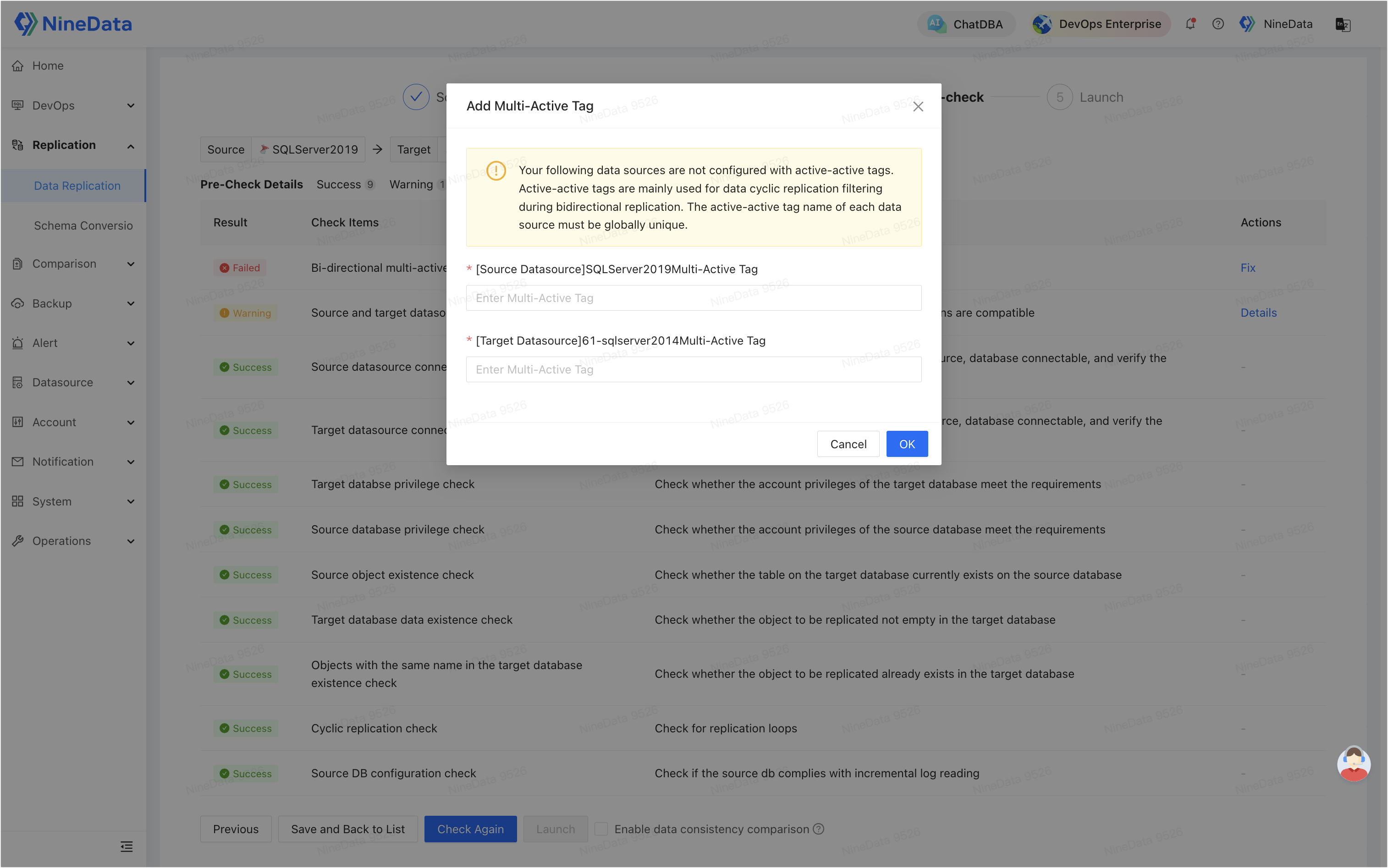
If it finds an issue, you can auto-fix with one click.
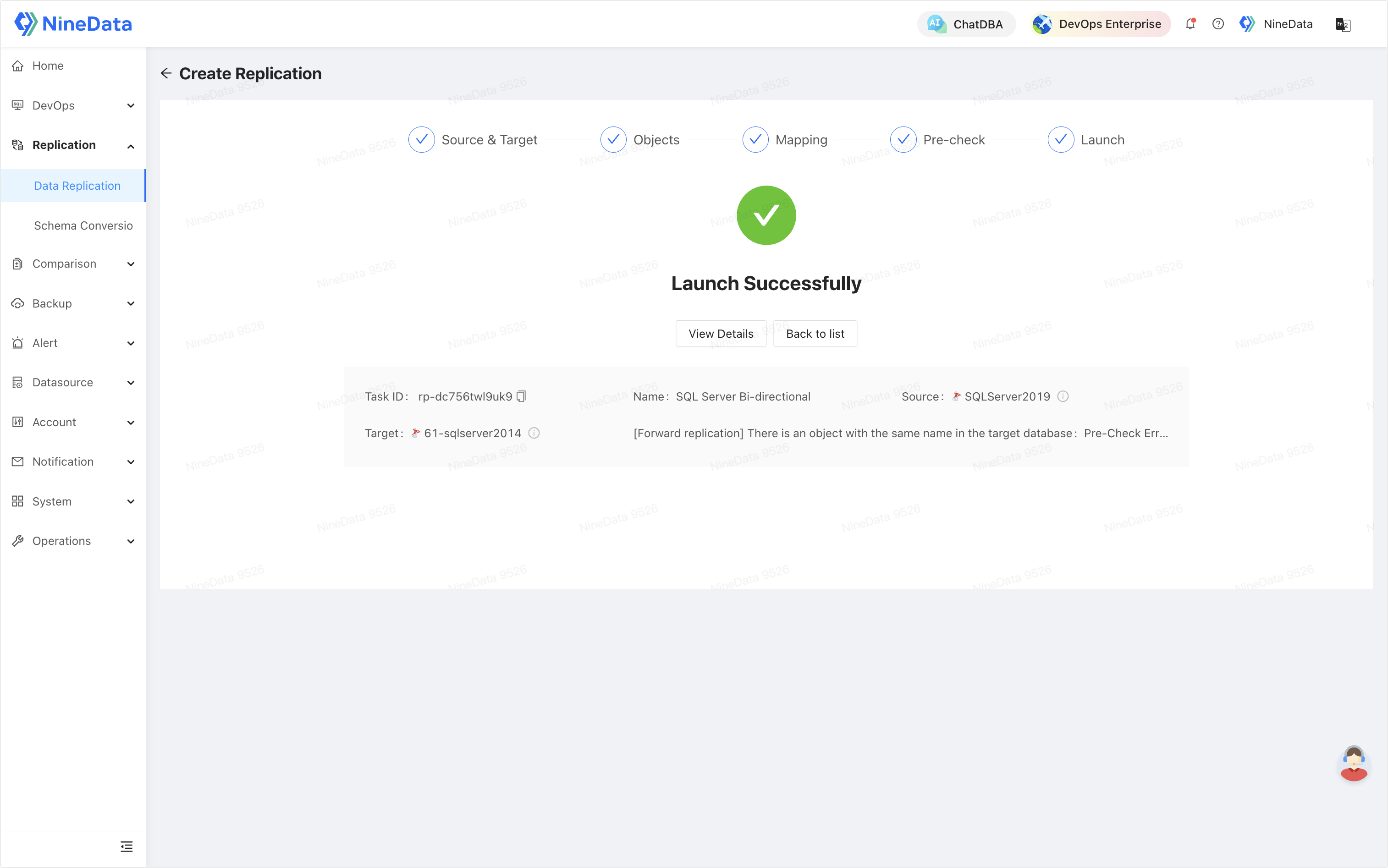
And you’re done, replication goes live.
Why This Matters
At its core, bi-directional replication isn’t just a technical upgrade. It’s a business resilience strategy.
- Your apps stay online, even if a data center goes down
- Users everywhere get faster response times
- Teams can scale globally without worrying about data silos
In other words: your data becomes as flexible as your business needs to be.
Final Thoughts
Bi-directional replication used to be a headache. Now, with NineData, it’s a feature you can set up in minutes, and trust to keep your data consistent across the world.
If your organization runs SQL Server across multiple regions, this is the upgrade you didn’t know you needed.